
ABOUT PLAN B AND C
Plan B and C exists because the obvious answer is not always the right one.
We work with people and businesses facing decisions where there may be several reasonable paths forward. The work is figuring out which one actually fits the objective, the economics, the operating reality, and the people responsible for making it work.
Why Plan B and C?
Most important business decisions are not really choices between a good option and a bad one.
They are choices between several possible answers, each with different costs, risks, tradeoffs, and consequences.
Someone considering business ownership may be looking at a franchise, an existing business, an independent startup, consulting, licensing, or another way to create income and control.
An existing business may be dealing with growth, a difficult vendor relationship, an operational problem, a leadership gap, disconnected systems, an underperforming digital presence, or an initiative that looked straightforward until the pieces stopped fitting together.
Plan B and C was built around those situations.
The objective is not to force a problem into a predetermined service. It is to understand what is actually happening, identify the realistic alternatives, and determine what makes sense from there.
HOW WE THINK
A decision framework before a solution
The subject matter may change, but the way Plan B and C approaches a problem is remarkably consistent.
Assess
Understand what is happening, what the actual objective is, what has already been tried, and which assumptions may need to be challenged.
Stabilize
Identify the immediate risks, constraints, or operating issues that have to be addressed before a larger decision can be made well.
Create Options
Develop realistic alternatives rather than treating the first available answer as the only answer.
Move Forward
Choose a path that can actually be executed, then move with enough clarity to know why that decision was made.
THE WORK
Two sides of the same kind of problem
Plan B and C works primarily in two areas: business ownership advisory for individuals evaluating what comes next, and strategic advisory for businesses dealing with operational or organizational complexity.
They may look different on the surface, but the underlying work is similar. Both require understanding objectives, constraints, risk, economics, people, systems, and the consequences of a decision before committing to it.
PRIMARY PRACTICE
Corporate Refugee
Business ownership advisory for experienced professionals considering independence, acquisition, franchising, consulting, or another path beyond traditional employment.
Explore Corporate Refugee →STRATEGIC ADVISORY
Business & Operational Advisory
Outside perspective and hands-on support for strategy, operations, fractional leadership, procurement, supply chain, business systems, CRM and workflow automation, websites, SEO, digital marketing, business development, growth, and execution.
Explore Strategic Advisory →Business ownership is not a product category
A franchise can be the right answer. So can buying an existing company. So can building something independently, licensing a business model, becoming a distributor, or turning professional experience into a consulting practice.
And sometimes the right answer is not to buy anything.
That is why Plan B and C begins with the person rather than the opportunity.
What are you trying to change? How do you want to spend your time? What are you good at? What do you want no part of? How much capital are you comfortable putting at risk? What income eventually needs to come out of the business? How much responsibility do you actually want for employees, customers, sales, operations, and growth?
Those questions usually tell us more than a list of available businesses ever could.
Compare Business Ownership Options →Advice has to survive contact with reality
The same philosophy applies to strategic advisory.
A theoretically perfect recommendation has limited value if the organization cannot execute it.
Businesses operate with real budgets, real people, imperfect systems, contractual obligations, competing priorities, political realities, customer expectations, vendor dependencies, and limited management capacity.
Recommendations have to account for those conditions.
Sometimes the best answer is a larger transformation. Sometimes it is a relatively small operating change. Sometimes the first priority is simply stabilizing the situation long enough to understand what needs to happen next.
The scale of the answer should match the scale of the problem.
BEHIND PLAN B AND C
Experience across very different environments
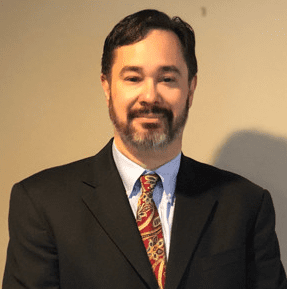
Plan B and C was founded by Matt Agnese, MBA, CFC.
His background spans emergency medical services, healthcare operations, procurement and supply chain, research organizations, business ownership, franchise advisory, and operational leadership.
Those environments may not appear closely related, but they share an important characteristic: decisions have consequences.
Across that work, the recurring problems have involved managing risk, working through incomplete information, balancing competing priorities, dealing with operational constraints, and making decisions that still have to function after the meeting is over.
That experience shapes the way Plan B and C approaches both ownership decisions and business advisory work today.
THE PRINCIPLE
Independent judgment matters
Advisory work only has value if there is room to reach a conclusion the client did not expect.
That can mean recommending a different ownership path, challenging the economics of a proposed deal, identifying risks that deserve more attention, questioning whether an operational initiative is solving the right problem, or deciding that no action is currently the best action.
The goal is not agreement for its own sake.
The goal is a better decision.
Plan B and C’s standards for transparency, professional responsibility, confidentiality, referrals, conflicts, and client relationships are described in our Code of Ethics and Business Conduct.
There is rarely only one path forward
That idea is the reason for the name.
Plan A is usually the path everyone can already see.
The more useful work often begins when Plan A no longer fits, when the obvious answer deserves another look, or when several reasonable alternatives need to be compared without pretending any of them are risk-free.
Plan B and C exists to help work through those decisions.
Considering Business Ownership?
Start with Corporate Refugee and evaluate what ownership could realistically look like for you.
Explore Corporate Refugee →Dealing With a Business Problem?
Explore strategic advisory when the business needs clearer analysis, operating improvement, or additional leadership capacity.
Explore Strategic Advisory →START THE CONVERSATION
Bring the decision, the problem, or the idea that does not quite fit into Plan A.
The first conversation is about understanding what you are trying to accomplish and whether Plan B and C is the right place to help.