
Thirty years of being the one called in when it counted.
I’m Matt Agnese, MBA, founder and president of Plan B and C, Inc. For 15 years I was a paramedic and flight paramedic. For the next 15, I led operations, procurement, and supply chain in healthcare and federally funded research and graduate education, often brought in to stabilize regulated operations, in roles up to Director, VP, and President level. I hold an MBA. Plan B and C is an IFPG member and a partner of Pipedrive, Zoho, and Dripify. Today I put that experience to work for business owners and for executives ready to own what comes next.
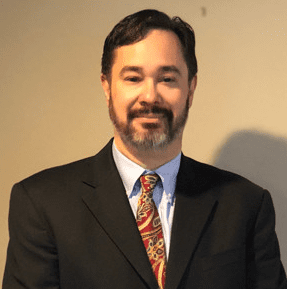
I’ve spent most of my career on the operating side of decisions.
My background spans 15 years in emergency medical services, then 15 years of operations, procurement, and supply chain work in healthcare and federally funded research and graduate education, followed by consulting and business ownership.
I have worked in organizations where the budgets were real, the operational consequences were immediate, and a decision that looked good on paper still had to work when it reached the people expected to execute it.
I have served in Director, Vice President, President-level, interim, fractional, and advisory roles. Some assignments involved building systems. Others involved stabilizing difficult situations, improving operations, negotiating contracts, managing vendors, addressing supply problems, or establishing what was actually happening before anyone tried to fix it.
That operating perspective is the foundation of Plan B and C and the way I approach business ownership, strategic advisory, partnerships, and opportunities we choose to pursue directly.
Clarity before activity.
A lot of expensive mistakes begin with a solution in search of a problem.
I prefer to work the other way around. Understand the situation first. Separate the actual problem from the noise surrounding it. Then decide what tools, structures, or opportunities deserve attention.
The range is not accidental.
Different industries and roles taught different lessons, but the work repeatedly came back to people, systems, resources, risk, and accountability for the outcome.
The longer story, from flight paramedic to business owner, is in Why I Do This Work.
Emergency Medical Services
I spent 15 years in EMS, working up from EMT to paramedic, flight paramedic, and instructor. Emergency medicine teaches you to assess quickly, prioritize correctly, work with incomplete information, and remain accountable for what happens next.
Operations in Regulated Environments
My operations career ran across healthcare and federally funded research and graduate education. These were regulated environments, and I was usually brought in to stabilize underperforming operations and put the right processes, systems, and procedures in place: materials, budgets, vendors, compliance requirements, and supply systems.
Procurement and Supply Chain
I have led procurement, strategic sourcing, contracting, vendor management, materials, and supply chain functions where cost, availability, quality, compliance, and operational continuity all had to be considered together.
Executive Leadership
Director, Vice President, President-level, interim, and fractional responsibilities added another layer: organizations are systems. Fixing one problem without understanding its effect on the rest of the organization can simply move the problem somewhere else.
Consulting and Advisory
Consulting taught me that expertise alone is not a business. You still have to find the work, build relationships, price it, negotiate it, deliver it, manage the agreement, get paid, and create enough value that someone wants to work with you again.
Business Ownership
Building and operating businesses changes the perspective again. Revenue matters. Cash flow matters. Capital matters. So do customers, contracts, risk, timing, execution, and whether the business actually supports the life or objective it was supposed to create.
These are not abstract subjects for me. They are areas in which I have had responsibility, made decisions, managed consequences, or built businesses myself.
The objective comes before the business.
A large part of my work today is as a Business Ownership Coach, helping corporate professionals find the right business to own and decide whether business ownership or self-employment belongs in what comes next. As a Certified Franchise Consultant (CFC), I know franchise systems from both sides, so you get a straight answer on whether one fits you.
I do not believe everyone should own a business. I also do not believe that every ownership conversation should begin or end with a franchise.
The discussion starts with what someone is trying to accomplish, the economics required to support it, the operating role they want, the capital available, the risk that makes sense, and the life the business is supposed to support.
The company reflects the career behind it.
Plan B and C was never intended to be a one-product consulting company.
The name reflects how I tend to approach problems. The obvious answer may be fine. But before committing to it, I want to know what the alternatives are, what they cost, what they require, and whether one of them solves the actual problem better.
That is why Plan B and C has two practices: Corporate Refugee, for professionals weighing self-employment, and Strategic Advisory, for operations, procurement, fractional leadership, and connected systems built on Pipedrive or Zoho One.
One company. Two ways to put experience to work.
Each practice uses the same operating discipline in a different context.
Start with the situation, not a predetermined answer.
If you are considering business ownership, evaluating an acquisition or franchise, working through an operating problem, exploring a partnership, or have an opportunity worth discussing, start with the conversation. We can determine where it belongs from there.
Start a ConversationWorked with me?
A quick Google review helps other business owners and career changers find the right help.